Our Story
What's your water?
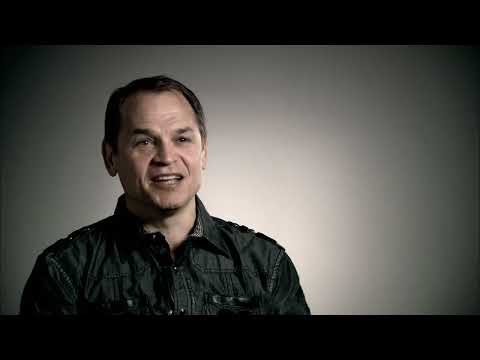
Watch Dewey's full story on YouTube — opens in a new tab
The Volcano
I was lost on one of the largest volcanoes on earth. Feared dead. Doing what I'd done my whole life - solving the problem from inside my head.
It almost killed me. Not the volcano. The numbness of disembodied thinking.
"The fish doesn't notice the water."
The Belly
Kilauea. Three hundred and thirty thousand acres of volcanic rock in Hawaii. I'd been out there alone and I was genuinely lost. No phone signal. No trail. Nobody knew where I was.
And I was fine. I mean - I was in danger. But I was fine. Calm. Analytical. Running the puzzle. Just solving the problem. The way I'd solved every problem my entire life. From inside my head.
Now, I'd just come from fourteen months of training in mindfulness & introspection. Learning to pay attention to what was happening in my body, not just my thoughts. And even with all that training, here I was on this volcano, right back in my head. Because here's the thing about your nervous system - when stress gets high, it reverts to its most familiar pathways.
But something my training gave me - I noticed there was a sensation in my belly. A tightness. A squeezing. And it had been there most of my life. It was so familiar that I'd never actually noticed it.
But this time, I noticed.
"The fear saved my life."
The Discovery
And the practice I'd learned was simple. You sit with the sensation. You get curious about it. Does it have a shape? A temperature? Is the pressure sharp or dull? You don't try to fix it or explain it. You just get deeply familiar with it. And then you let the part of your mind that sends you dreams translate for you.
And what it said was: this is fear.
I was afraid. On a volcano. Lost. Possibly dying. And my nervous system had been so committed to suppressing that information that I almost couldn't feel it.
I grew up a tough, roughhousing kid in Texas. And where I came from, men didn't feel fear. If you felt fear, you were weak. Less than. Unworthy.
So when I finally felt it - sitting on that volcanic rock - the first thing that happened wasn't relief. It was grief. And then more fear. Because I was breaking the rules. I was violating the conditions under which I felt worthy to receive acknowledgment, connection, love.
"I was violating the conditions under which I felt worthy to receive love."
The Decoupling
But here's what the volcano gave me that nothing else could have. I was sitting there, feeling this fear, and I was also still there. Still surviving. Still resourceful. Still tough. The fear didn't make me less capable. It actually made me more capable - because once I felt it, I got sober about my situation. I stopped scanning for helicopters and focused on what would actually keep me alive: finding water.
The fear saved my life. The thing I'd spent decades suppressing - the emotion that was supposed to make me weak - was the one that kept me alive.
"Your nervous system reverts to its most familiar pathways."
The Fish
There's a parable that says the fish doesn't notice the water. And here's what that means in neuroscience. Your prefrontal cortex - the part of your brain that thinks, plans, reflects - it doesn't begin to come online until around age seven. Everything that was in your environment before that? It becomes invisible to you. It's just the backdrop. Your brain's prediction systems expect it to be there the same way you expect gravity. You don't question it. You can't even imagine it being different.
"The fish can't imagine dry land."
The Father's Water
My father grew up with alcoholic & deeply wounded parents. Chaos was his water. The threat of addiction scared him, so he never touched substances during my childhood. But his work, his public standing - that became his addiction. That took precedence over relationships. Over human connection.
And I was proud of him. I was proud of his success. And I was incredibly alone. Unwanted. Unvalued. Both things, at the same time.
Both of my parents had their own emotional wounding. They needed things that children can't provide. So I did what any child's nervous system would do - I disconnected. I separated. And my young brain, before it could think, before it could reason, concluded: this is what all intimacy is. This is what all relationships are. People are not safe.
That was my water. And I swam in it for decades without knowing it was there.
"The only sadness in it is looking at my fellow human beings and wishing they could feel what I feel."
The Translation Home
After I was rescued from that volcano, something was different. There was a warmth with my family that I hadn't noticed before. Not that it was new - I just couldn't feel it before. Back in Colorado, something felt different about my connection to my teachers, to other students. The signal had always been there. I'd finally developed the equipment to receive it.
And then, slowly - not overnight, not in a flash - a widening circle. A mentor who showed me what safety with another person could feel like. A cat named Sparky who kept opening my heart. A men's group where vulnerability wasn't weakness - it was the whole point. Continued practice. Learning to listen to the body. And gradually, eventually, finding safety and trust and intimacy with women.
The Tuesday Morning
These days, I get up in the morning and go for a walk with my fiance. We get some sun. Some exercise. I notice the trees. The sky. Children playing. I feel inspired about my work, but not rushed. Not desperate. I've got this tribe of friends - talented people I support, who lean in to support me. People I can be truly authentic with. Transparent. Vulnerable. Real.
I never could have imagined this life from inside the water I was swimming in. Not because I wasn't smart enough. Not because I didn't want it. Because the fish can't imagine dry land. The prediction mechanisms in my brain literally could not construct an image of what I'm living now.
The Grief
My life is beautiful. It's connected and loving and supportive and safe and playful and fun. And I don't have a single complaint about it. Except one.
I look around at people I care about - friends, family, strangers - and I see them living in their water. And some people have tried to change and it didn't work - so they've concluded that change doesn't work. And some people believe they're too broken for it to work on them. And some people are so unconsciously terrified that any change will destabilize who they are, that they won't risk it.
That's my grief. That's the one thing. I'm walking around in this life that I love, and the only sadness in it is looking at my fellow human beings and wishing they could feel what I feel. Knowing most of them can't even see that it's possible.
Not because they're broken. Because the fish doesn't notice the water.
That's Why Thrive Grant Exists
We believe that most people don't know what's possible for them. That the barriers to change aren't weakness or brokenness — they're invisibility. The patterns installed before you could think are the hardest ones to see.
Thrive Grant offers three months of high-quality, experiential inner work — fully funded by the community — to someone who's ready to see their water.